
The Cost of the Return
A Journey to the Centre of the EarthThis thread traces the expedition’s recurring uncertainty about whether forward progress can ever be reconciled with a safe return home.
increasing Bearing strength in each event
 decreasing
Bearing strength in each eventdecreasingHenry Asks How to Return
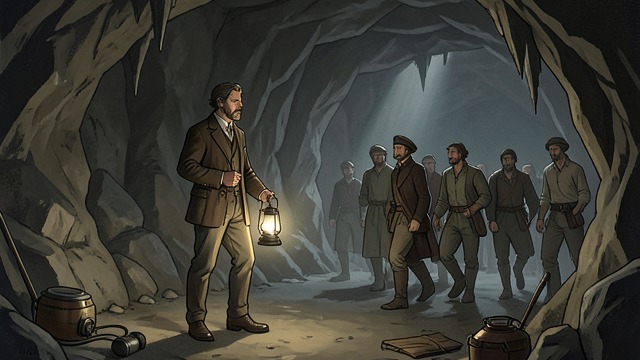
Henry Asks How to Return
A question the plan avoids
Henry accepts the possibility of traveling toward the earth’s center only after raising the problem of getting back. Professor Hardwigg treats the return as a lesser concern and assumes a way will become available.
The exchange identifies a gap between discovery and survival. The Professor focuses on whether an entrance exists; Henry asks whether it can also be an exit.
Confidence without a route
No detailed return plan accompanies their preparations. The travelers carry equipment for descent while trusting that future geography will supply an answer.
The unresolved question persists beneath every later success and reminds the reader that reaching a destination is not the same as completing a journey.
The Crater’s One-Way Threshold
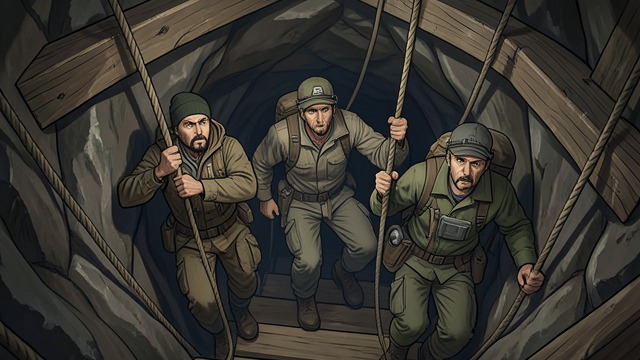
The Crater’s One-Way Threshold
Descent without assurance
The travelers lower themselves into the shaft using ropes and improvised stages. Henry worries about how they will retrieve the ropes and whether the passage can ever be climbed in reverse.
Professor Hardwigg devises a method that allows them to continue downward, but the practical solution addresses the next step rather than the whole return journey.
Commitment deepens
Once the group reaches the bottom and enters the underground passage, the surface becomes increasingly distant. Their decision to proceed gains weight because turning back will require the same difficult route in reverse.
The shaft marks a physical threshold and an ethical one: the travelers have accepted danger without knowing what a safe completion would require.
A Return Almost Chosen
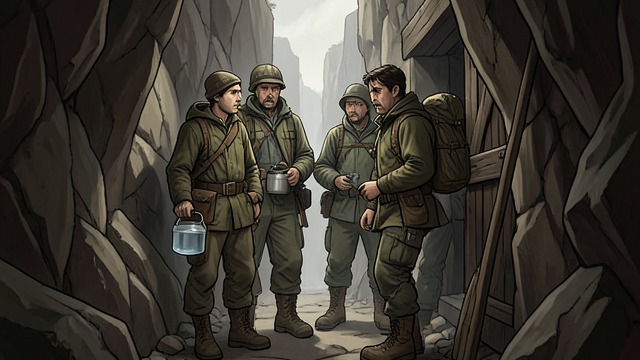
A Return Almost Chosen
Survival argues for retreat
After the eastern passage proves useless, Henry wants to return to the surface. The group’s dwindling water makes his proposal more than a preference for safety: it is a response to immediate physical limits.
Professor Hardwigg resists because he believes another route may provide water. He briefly gives Henry his last mouthful but continues to hold open the possibility of going farther.
The unresolved bargain
Hardwigg promises to abandon the expedition if one more day yields no spring. The discovery of the Hansbach saves the journey but leaves the original return question unanswered.
A reprieve postpones the choice; it does not prove that continued descent is safe or that a return remains possible.
The Storm Sends Them Back
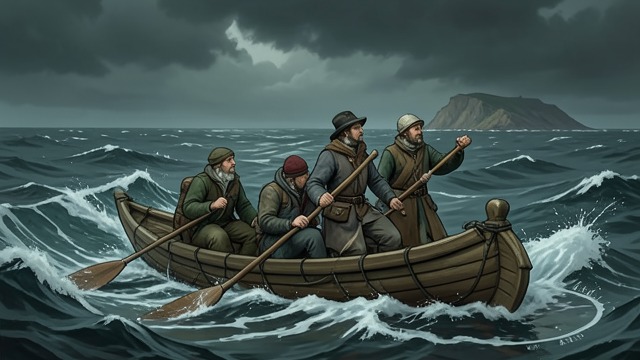
The Storm Sends Them Back
Progress reversed
The storm carries the raft across the Central Sea, and the travelers discover that they have returned toward the shore they had thought distant. Their attempt to advance has instead imposed an unexpected detour.
The reversal briefly makes the expedition seem futile, while the compass’s reading adds uncertainty about where they have arrived. The party must choose between accepting the setback and setting out again.
A return becomes a clue
Exploring the shore reveals Saknussemm’s dagger, initials, and the blocked passage. The unwanted return places the travelers near evidence that might renew their route toward the interior.
The episode suggests that retreat and progress are not always opposites; an involuntary return can expose a path the intended journey would have missed.
An Exit No One Planned
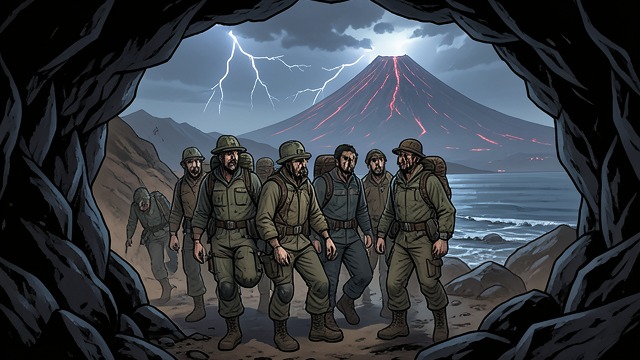
An Exit No One Planned
The return route arrives as danger
The underground flood carries the travelers upward through an active volcanic passage. Professor Hardwigg recognizes that the eruption may be their only chance to return to daylight, although its violence could destroy them.
The party does not select a safe exit or control its destination. Its return is produced by a chain of effects set in motion when they blast the rock.
Home regained, goal unfinished
They emerge on Stromboli, far from Sneffels, and eventually reach Hamburg. The journey back is complete even though Professor Hardwigg never reaches the center of the earth.
The ending distinguishes survival from conquest: the travelers return not because they mastered the route but because they endured an exit they could not have planned.
Before the expedition leaves Hamburg
June 29, at the bottom of the first shaft
July 7, before the party commits to the western route
After the storm wreck and before the renewed departure
During the final eruption and the October return home
